Cantwell and Renata’s final farewell
Across the River and into the TreesCantwell and Renata’s final farewell turns an ordinary departure into a deliberate act of separation: luggage and Renata’s portrait are loaded, a boat carries them to the landing, and a goodbye that neither seems ready to make is finally spoken. The scene moves from careful arrangements and strained quiet to tears and a hard, tender kiss. Its intimacy lies not in a promise that parting can be undone, but in the effort to face it together.
Departure and the journey to the landing
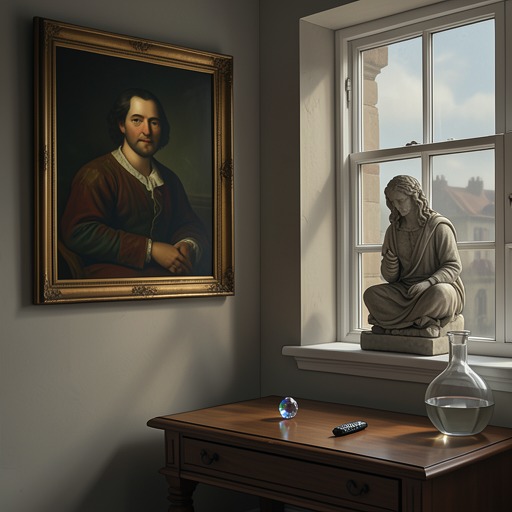
The departure is prepared with the precision of a practical routine. At the concierge’s direction, the hall porter has telephoned for the same motor boat the couple had ridden in before. T5 Jackson travels with the luggage and Renata’s portrait, carefully wrapped; the hotel staff load both, make sure Jackson is properly seated, and then withdraw. Cantwell has paid his bill and given the expected tips. These arrangements make the leave-taking feel already in motion before the couple has managed to speak about it.
Renata asks whether she can ride with Cantwell to the garage. He answers that it would be just as bad there, and when she persists he lets her come, acknowledging that the choice is hers. Their exchange preserves the difficulty between them: she wants to accompany him, while he reminds her that she was not invited. He does not turn that refusal into a ban. Instead, he yields, and they travel together without talking. The wind is blowing hard, but the motor boat moves so slowly that the stern wind seems almost absent. Their silence gives the short crossing the weight of a longer reckoning.
A pause before goodbye
At the landing, Jackson hands the luggage to a porter and attends to Renata’s portrait himself. Cantwell asks whether Renata wants to say goodbye there. She asks whether she has to; he answers that she does not. The exchange delays the farewell without dissolving its necessity. Neither insists on a formal moment before she is ready, and neither can make the decision to leave disappear.
Cantwell pays the boat’s owner and speaks about the man’s jeep engine. He has not forgotten it, he says, but warns the owner not to count on receiving it, while offering a good chance that he can get one. It will be used, but better than the “coffee pot” currently in the boat. This practical promise belongs to the same scene as the lovers’ separation: even at the edge of departure, Cantwell attends to another person’s need, though he is careful not to promise more than he can deliver.
They go to sit on a bench under a tree. The trees are black, bare, and moving in the wind; their leaves have fallen early and long ago been swept up. A man approaches to sell postcards, and Cantwell sends him away because they do not need him now. The brief interruption sharpens the privacy of the moment: the public landing continues its ordinary business, but the two remain occupied with the goodbye they have postponed.
Tears, words, and the final embrace
Renata finally cries, although she had decided that she would not. Cantwell tries to console her with the image of the vehicle in which they now ride, saying it has no shock absorbers. The joke offers no real escape from pain, and she answers that she has stopped crying and is not hysterical. He concedes that point while insisting that what he said is true. Their exchange makes room for a feeling that neither can neatly master: the tears have come, but Renata refuses to let them define her.
When she asks what happens now, Cantwell says they should stand, kiss, and say goodbye. Her surprise at the proposal leaves him admitting that he does not know; it is something everyone has to work out for themselves. The uncertainty matters. He can name the actions required by departure, but he cannot supply a rule that would make them bearable or tell them what comes after.
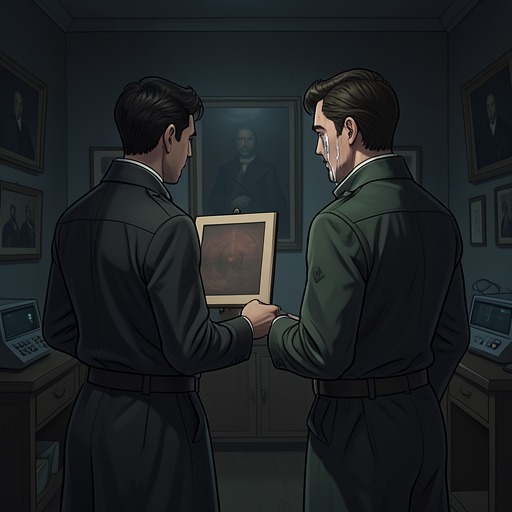
Renata asks him to keep trying, calling that their only hope, and Cantwell promises that he will. The scene does not specify here what the effort will achieve; it gives the promise force through its plainness. They hold one another close and kiss “hard and true.” Cantwell then takes her across the gravel and down the stone steps, carrying the parting from words into movement.
Care and separation
As they reach the boat, Cantwell advises Renata to take a good one rather than the old boat with the displaced engine. She chooses the displaced-engine boat instead. His response—“Not me. I only give orders and obey orders. I don’t mind.”—turns his military language into a wry acknowledgment that the choice is hers. The joke does not erase the difference between them or the imminent departure; it lets affection and discipline occupy the same sentence.
Their last exchange is spare. Cantwell calls her “my dear, lovely, beautiful,” and Renata says goodbye. The scene ends not with an explanation or a guarantee of reunion but with a completed parting: the boat, the carefully wrapped portrait, the luggage, and the remaining promise to keep trying. The farewell’s emotional movement—from silence, through resisted tears, to an embrace—makes the goodbye an act they must perform together, even though neither can make it painless.